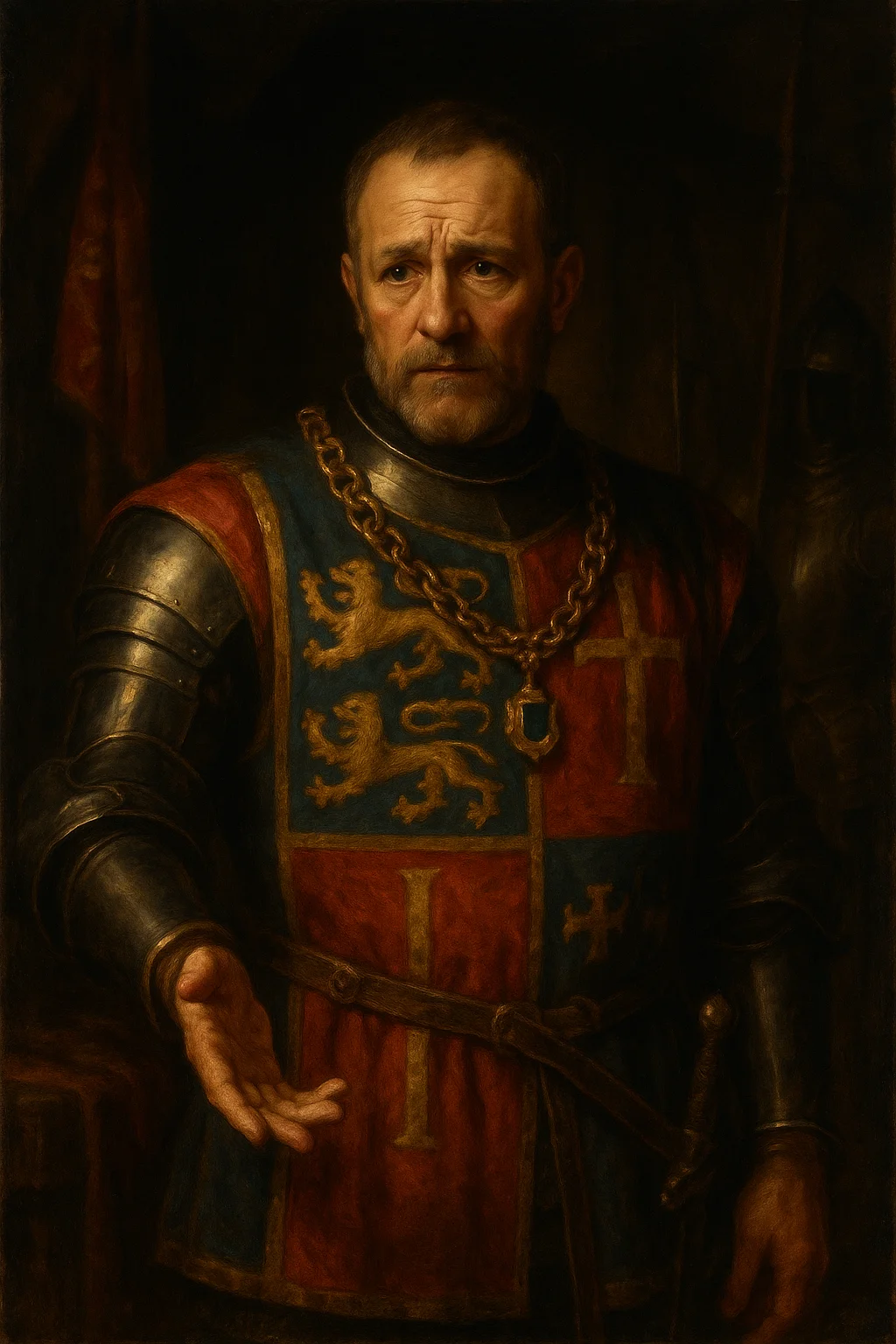
Westmoreland
Westmoreland provides the dramatic occasion for the play's most celebrated speech - his honest wish for more soldiers before Agincourt is the exact provocation Henry needs to deliver the St Crispin's Day address that turns dread into pride.
Appears In
Who is Westmoreland?
Westmoreland is an English earl present at the Southampton council where the conspiracy of Cambridge, Scroop, and Grey is exposed, one of the loyal nobles whose steady presence around Henry establishes the settled confidence of the crown even as treason is uncovered within its own ranks. His role through the early acts is that of a dependable presence rather than an initiator of events, a man who supports the king's decisions without needing to be persuaded of them.
His single most consequential line arrives on the morning of Agincourt, when, surveying the vastly outnumbered English force against the French host, Westmoreland wishes aloud that they had even ten thousand of the men now idle in England to help the day. It is an entirely understandable wish under the circumstances - and it is precisely the wish Henry seizes upon and inverts, building from it the St Crispin's Day speech that transforms the army's fear into pride at being so few.
Westmoreland's momentary doubt, honestly spoken and instantly redeemed by the king's rhetoric, gives Henry's most famous speech in the play its dramatic occasion; without Westmoreland's wish for more men, there is no 'we few, we happy few' to answer it.
Motivation
Westmoreland is motivated by a practical soldier's anxiety about the odds his army faces, an honest fear he voices without any intention of undermining morale, and which the king converts into the opposite of what he feared.
Personality
Westmoreland's candor about the odds before Agincourt is not cowardice but plain arithmetic, spoken aloud by a steady, practical soldier who has done the count and does not like the result - and who is entirely won over, like every other man on the field, by what the king makes of that honesty.