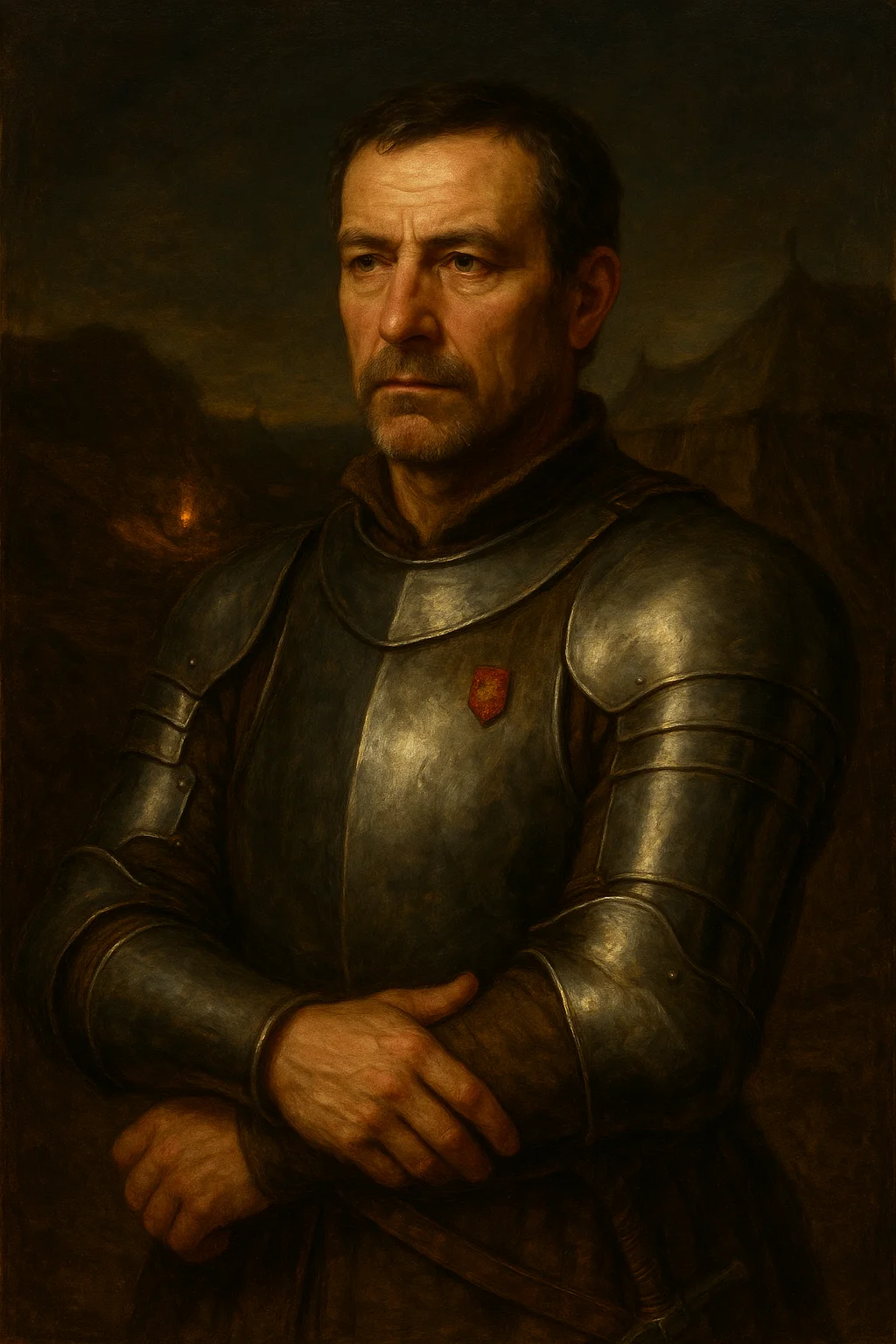
Gower
Gower serves as Fluellen's steady companion and occasional straight man through the campaign, and delivers, late in the play, the sharpest and most unambiguous condemnation of Pistol's hollow bravado.
Appears In
Who is Gower?
Gower is an English captain and Fluellen's constant companion through the siege of Harfleur and the march to Agincourt, present as both audience and occasional check for Fluellen's long, garrulous excursions into classical precedent and the ancient disciplines of war. He rarely initiates the play's comic set-pieces himself, functioning instead as the steady straight man whose presence lets Fluellen's eccentricities register fully.
In the four-captains scene, Gower joins Fluellen, the Irish Macmorris, and the Scottish Jamy in a conversation that showcases, with equal parts comedy and genuine tension, the uneasy union of nations under Henry's single crown - Gower's role here is largely to keep the conversation moving and to smooth over Macmorris's quick temper rather than to dominate the exchange himself.
His most pointed moment arrives late in the play, after Pistol's bluster has finally been exposed: Gower delivers a sharp, unambiguous condemnation of Pistol as a 'counterfeit rascal' who has learned to imitate the manner of war without ever risking anything real in it - a rare moment of moral clarity delivered by a character who has spent most of the play simply observing.
Motivation
Gower is motivated by straightforward professional soldiering and a plain sense of justice - he has little patience for performance dressed up as valor, as his final judgment on Pistol makes clear.
Personality
Gower's steadiness makes him an ideal companion for Fluellen's more voluble enthusiasms, but his brief, decisive condemnation of Pistol at the play's end reveals a man with a clear and unforgiving sense of what real soldiering requires, and no patience left for those who have only performed it.