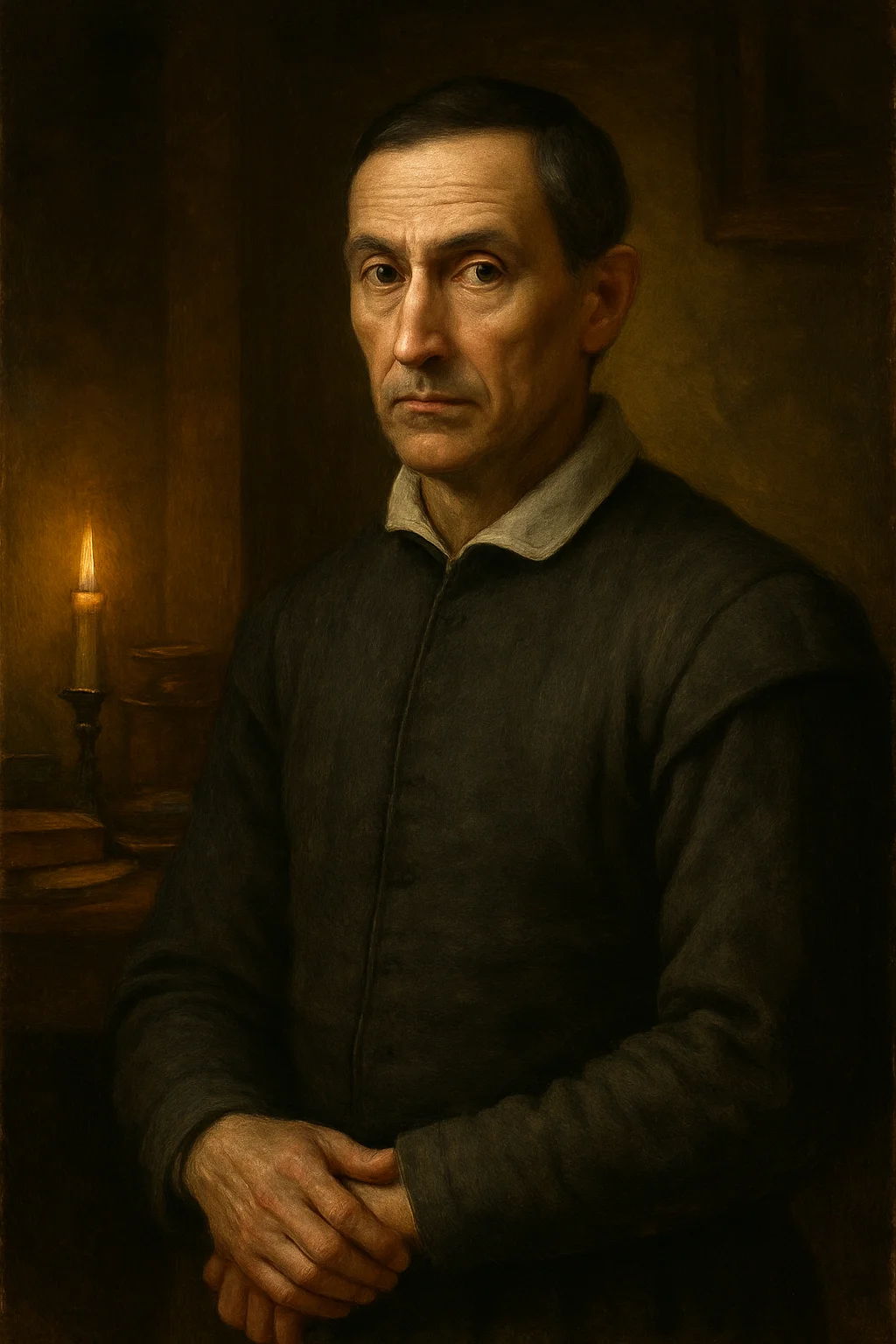
Reynaldo
Reynaldo's single scene reveals Polonius's essential nature with more precision than any of Polonius's scenes with the royal family. By making his servant the vehicle for spying on his son, Polonius exposes the total domestication of surveillance in his household - trust replaced by information-gathering as a matter of course.
Appears In
Who is Reynaldo?
Reynaldo is Polonius's servant, dispatched at the start of Act II to Paris with money and letters for Laertes - and with a secondary commission that reveals Polonius's character more precisely than almost any other scene in the play. Polonius instructs Reynaldo to spy on his own son: to spread calculated false rumours about Laertes's behaviour, then watch how Laertes's acquaintances respond to them, in order to catch him doing something disreputable.
The scene is both comic and disturbing. Polonius's instructions are so elaborate, so labyrinthine in their indirection, that he loses track of his own argument midway through - 'What was I about to say?' - and has to be prompted by Reynaldo himself. The servant, managing the master's confusion with patient exactness, emerges as the more competent intelligence in the room, though he never steps out of his prescribed role.
Reynaldo disappears after this single scene, his mission begun and his dramatic function complete. He is not a character in the full sense but a precisely observed instrument: the servant who exists to make Polonius's surveillance methods visible and to demonstrate, by gentle contrast, that good service can coexist with private intelligence.
Motivation
Reynaldo is motivated by the obligations of service - he does what Polonius asks without apparent moral reservation, while demonstrating through his precise follow-up questions that he is not merely passive. He listens, clarifies, and executes.
Personality
Reynaldo is a minor figure whose quality is revealed through contrast: he is more focused than his master, more organised, and manages Polonius's meandering instructions with a quiet efficiency that is itself a form of competence. His discretion is total; he does not judge, does not question the ethics of his commission, and gets on with the job.