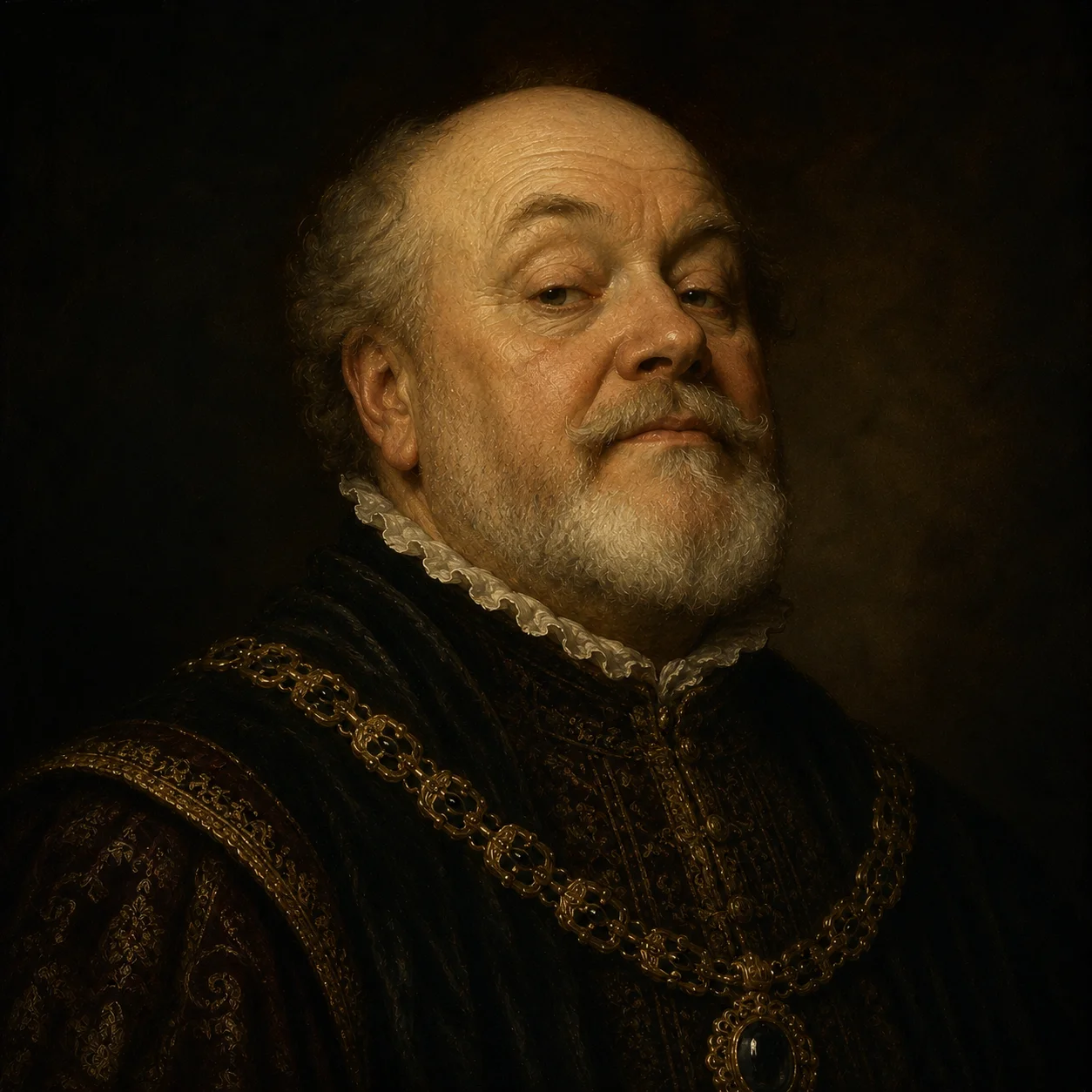
Polonius
Polonius serves as both the play's comic relief and the instrument of its most consequential accident. His meddlesome surveillance, his willingness to deploy his daughter as a pawn, and his fatal habit of listening from concealment lead directly to his death - and that death sets the play's final catastrophe in motion.
Appears In
Who is Polonius?
Polonius is the Lord Chamberlain of Denmark - the king's most senior courtier and chief adviser. Father to Laertes and Ophelia, he is a man of considerable authority within Elsinore, a long-serving official who has survived the transition between kings with his influence intact.
Verbose, self-important, and given to elaborate aphorisms, Polonius is nonetheless not a fool. He is politically shrewd in his instincts, if not always in his execution, and his scheme to use Ophelia to test Hamlet's sanity shows genuine strategic intelligence - however morally reprehensible its human cost.
His famous speech to Laertes - full of worldly counsel including 'To thine own self be true' - is richly ironic, given how thoroughly Polonius himself fails to live by it. He dies as he lived: eavesdropping from behind a curtain.
Motivation
Polonius is driven by the need to prove his own cleverness and indispensability to the king. His willingness to sacrifice Ophelia's emotional wellbeing for a piece of political intelligence reveals a man who has come to mistake cunning for wisdom.
Personality
Polonius is one of Shakespeare's most precisely observed comic portraits - a man of genuine intelligence who has allowed his love of his own voice and his obsession with appearances to corrupt his judgment. He is not actively evil; he is obtuse in the way that powerful men who have never been seriously challenged often are.