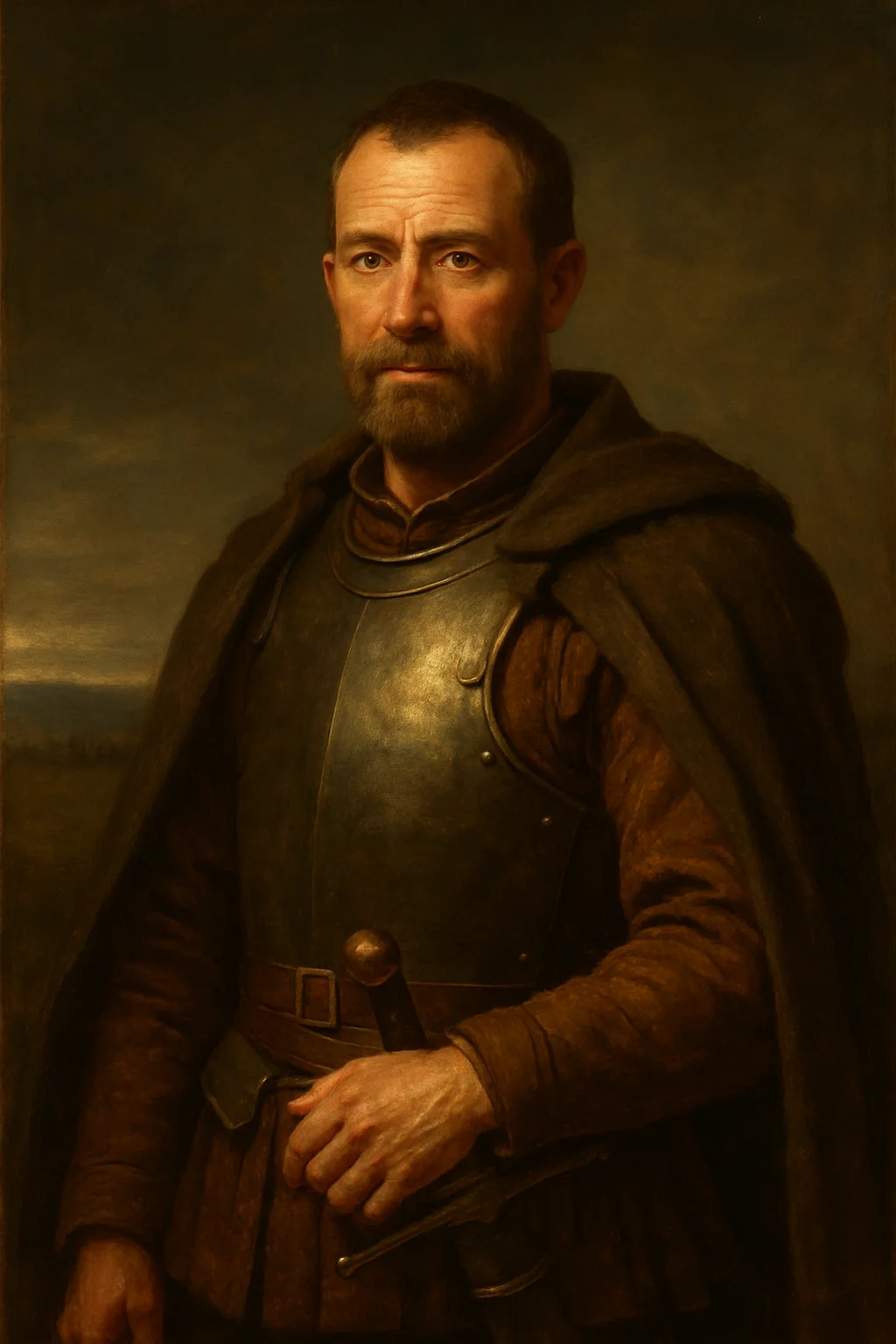
Captain
The Captain's single scene provides the occasion for Hamlet's 'How all occasions do inform against me' soliloquy. He is an instrument of the plot's mechanics - his account of the Norwegian campaign gives Hamlet the mirror he needs to see his own inaction most clearly.
Appears In
Who is Captain?
The Captain is a Norwegian officer in Fortinbras's army, encountered by Hamlet in Act IV Scene 4 as the army crosses Denmark on its way to fight for a worthless patch of Polish ground. His brief exchange with Hamlet is the trigger for one of the play's most important soliloquies.
When Hamlet asks what the army fights for, the Captain tells him plainly: a small plot of land not worth five ducats, a piece of ground that has no profit in it but the name. He says it without irony - this is simply what soldiers do. Hamlet is transfixed. The Captain's frank acceptance of purposeful action for almost no purpose whatsoever is precisely what Hamlet cannot do.
Motivation
The Captain is a soldier doing his job. He fights for what he is told to fight for and does not appear to find this troubling.
Personality
The Captain speaks with a soldier's blunt practicality. He knows the campaign he is part of is strategically worthless and says so without embarrassment. He represents the world of action uncomplicated by thought - the world Hamlet envies and cannot enter.