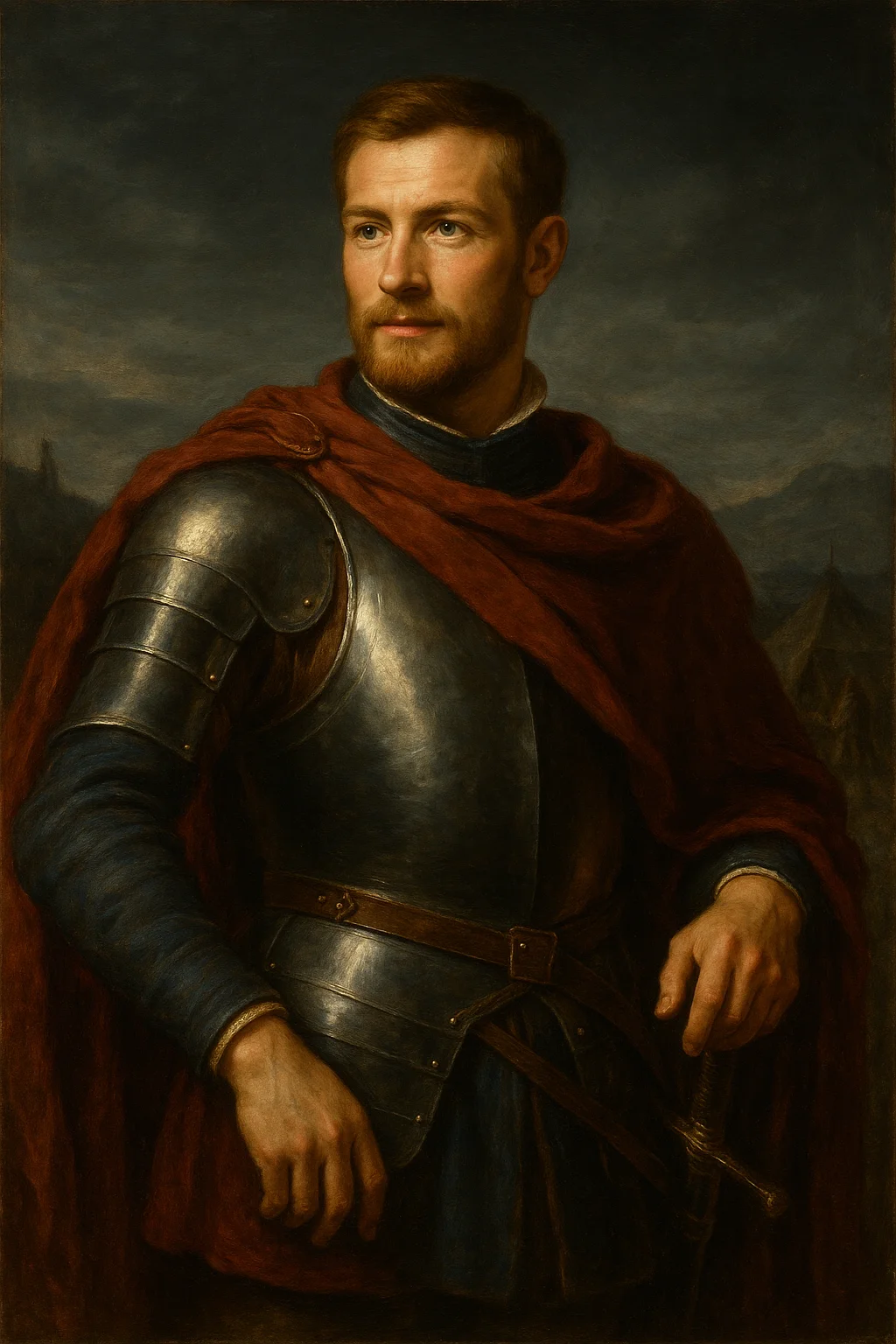
Fortinbras
Fortinbras is Hamlet's principal structural foil - the action-taker who throws the philosopher-prince's paralysis into sharpest relief. He never engages with Hamlet directly, yet the awareness of him presses on Hamlet throughout the play. His inheritance of Denmark at the close gives the tragedy its political resolution: order is restored, but by an outsider, because everyone inside has been consumed by the play's events.
Appears In
Who is Fortinbras?
Fortinbras is the Prince of Norway - young, martial, purposeful, and almost entirely absent from the play he haunts throughout. He is the shadow Hamlet cannot escape: another prince, another dead father, another claim to territory that requires action. Where Hamlet deliberates, Fortinbras simply moves. He appears in only two scenes, speaks fewer than thirty lines, and inherits Denmark.
His presence in Act IV Scene 4 is the pivot of Hamlet's most searing self-examination. Watching Fortinbras lead twenty thousand soldiers across Denmark to fight for a worthless patch of ground - purely for honour - Hamlet is shamed into the soliloquy that begins 'How all occasions do inform against me.' Fortinbras doesn't need to understand the cause he fights for; the act of fighting is itself sufficient. This is exactly what Hamlet cannot do, and cannot stop thinking about.
In Act V Scene 2, Fortinbras arrives to find the Danish court destroyed, claims the throne by right of election that Hamlet's dying voice grants him, and closes the play with a soldier's order: Hamlet shall be borne 'like a soldier' to his rest, with military honours and a cannon's roar. It is a fitting and slightly ironic end - the one man in the play who never doubted himself giving his highest honour to the man who doubted everything.
Motivation
Fortinbras is motivated by honour, military purpose, and legitimate political ambition. He wants to recover what his father lost and to act decisively on that want. He does not examine his motives; he acts on them. This is both his virtue and, in the world of Hamlet, the thing that makes him slightly alien to the play's deepest concerns.
Personality
Fortinbras is the play's antidote to Hamlet - a man of action who does not pause to examine the metaphysics of what he is doing. He is not shallow; he is simply oriented differently. His magnanimity at the close - ordering full military honours for Hamlet - reveals a genuine nobility of character, a man capable of recognising greatness in a form very different from his own.