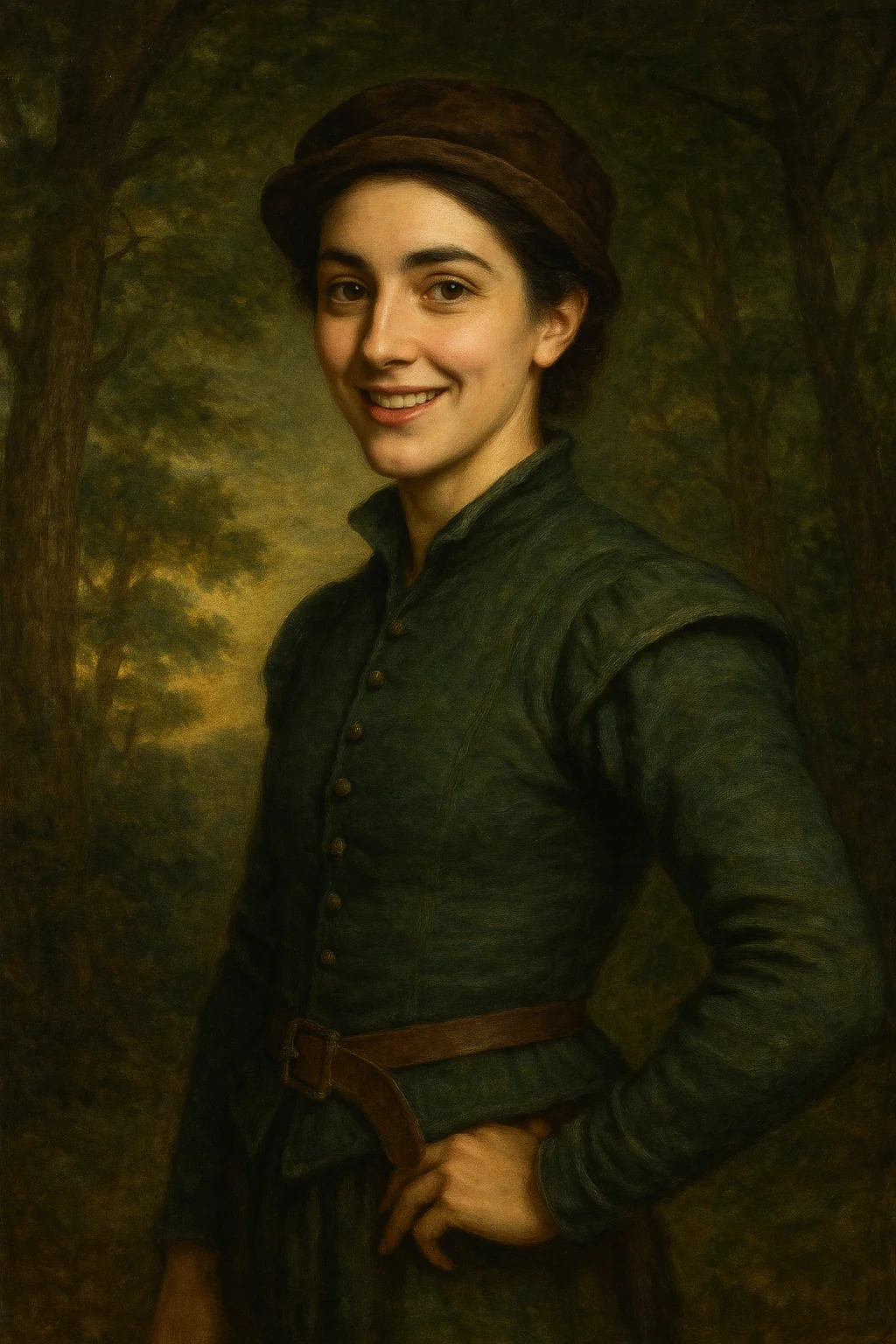
Rosalind
Rosalind is the play's protagonist and its wittiest mind - her banishment sets the forest plot in motion, her disguise as Ganymede creates its central romantic game, and her practical resolve arranges the happy ending for everyone, herself included.
Appears In
Who is Rosalind?
Rosalind is the daughter of the banished Duke Senior, kept at court only because Celia, Duke Frederick's daughter, refuses to be parted from her. She falls for Orlando within moments of watching him wrestle, and the gold chain she gives him afterward - 'Wear this for me' - is offered with a directness that has nothing coy about it. When Frederick banishes her without warning or real cause, her response is immediate and practical: rather than despair, she proposes disguise, distance, and a plan, and it is Rosalind, not Celia, who decides the shape their exile will take.
The decision to travel 'in man's apparel' as Ganymede does more than provide safe passage to the Forest of Arden - it gives Rosalind a freedom of speech she would never have as herself, and she uses it immediately to engineer an extraordinary situation: coaching Orlando, who does not recognise her, in how to court 'Rosalind' by wooing Ganymede-pretending-to-be-Rosalind each day. The game lets her test Orlando's constancy, mock the conventions of love poetry she privately adores, and say things about her own feelings that court manners would never permit a woman to say plainly.
What keeps Rosalind from becoming merely clever is how visibly the disguise strains against the feeling underneath it - she faints, convincingly, at the sight of Orlando's blood in Act IV, and has to talk her way out of the slip in character. Her closing engineering of four marriages at once, and the epilogue she delivers directly to the audience out of character entirely, confirm what the whole play has been showing: Rosalind is the one holding every thread, in disguise or out of it.
Motivation
Rosalind is motivated by a love for Orlando she trusts completely and wants to test rather than simply accept, alongside a broader appetite for the freedom - of movement, of speech, of feeling - that her disguise as Ganymede makes possible.
Personality
Rosalind combines a sharp tongue with real feeling underneath it - she teases Orlando mercilessly as Ganymede while genuinely testing whether his love will hold, and her wit is never used to keep people at a distance the way Jaques's is. She takes charge of her own circumstances at every turn, from proposing the escape to engineering the ending, without losing her capacity for open, unguarded delight.