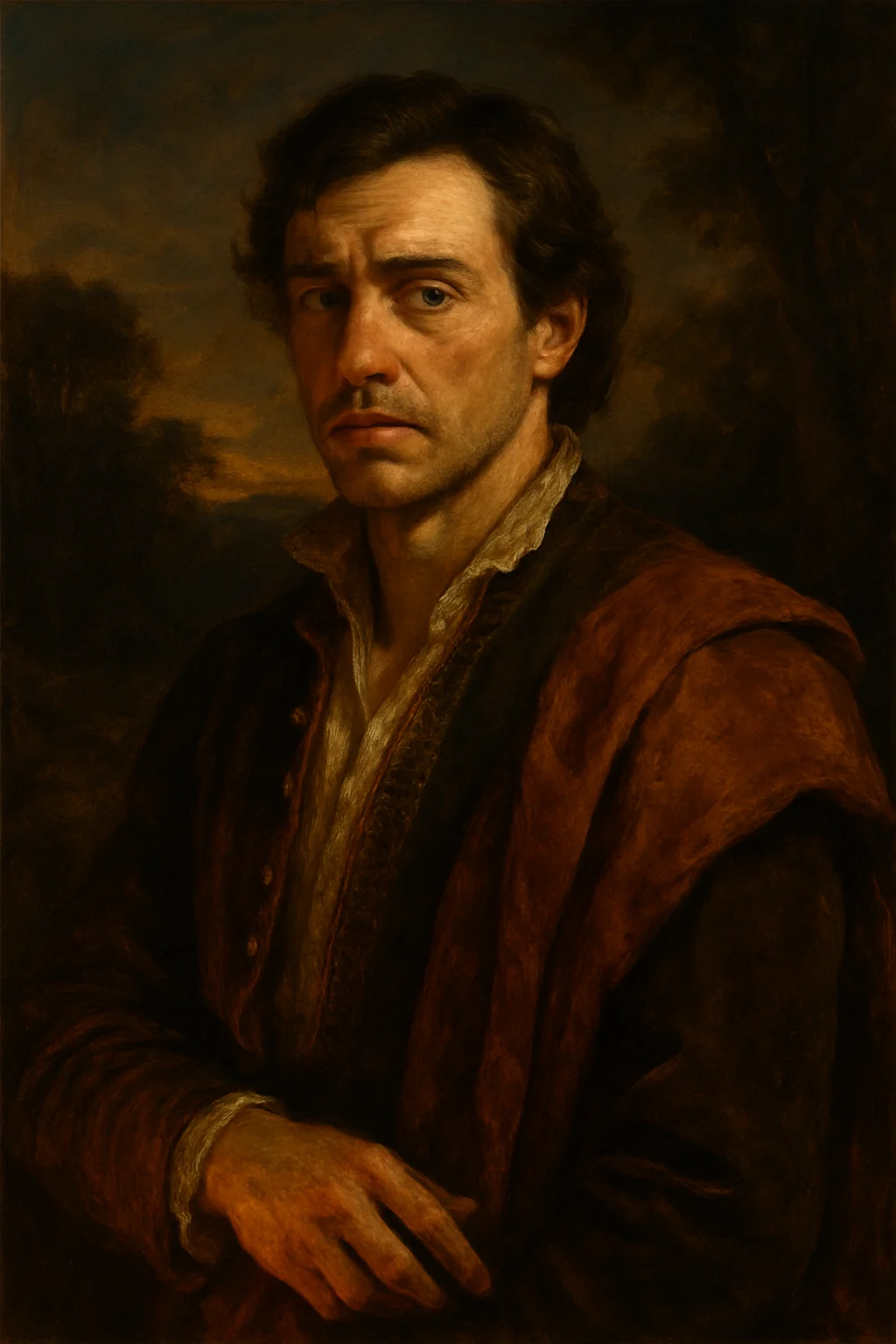
Oliver
Oliver is the play's initial antagonist within the family plot - his cruelty toward Orlando sets the flight to Arden in motion - and his sudden, total transformation after being saved from the lioness completes the play's pattern of forest-wrought reconciliation and love.
Appears In
Who is Oliver?
Oliver is Orlando's eldest brother and, in the play's opening scene, its clearest villain - he has withheld Orlando's inheritance and education in defiance of their father's will, keeps him 'rustically at home' like a servant, and admits in soliloquy to a hatred of his own brother he cannot fully account for, noting only that 'my soul... hates nothing more than he.' When Orlando bests the wrestler Charles, whom Oliver had privately hoped would maim or kill his brother, Oliver's hostility escalates into an outright plan to have Orlando killed.
Warned of the plot by Adam, Orlando flees, and Oliver himself is sent after him by Duke Frederick, ordered to bring his brother back dead or alive on pain of losing his estate - a command that puts Oliver in the forest with every incentive to complete the cruelty he began. Instead, he falls asleep under a tree where a lioness lies in wait, and Orlando, discovering him, saves his life at the cost of his own blood despite every reason to let his brother die.
The rescue undoes Oliver completely. He confesses everything to Rosalind and Celia - his own villainy, his brother's mercy, his overwhelming shame - and the transformation is total and immediate: within the same forest visit he reconciles with Orlando, resolves to live as a shepherd rather than reclaim the estate he schemed for, and falls in love with Aliena on sight. The play offers no gradual redemption, only a hinge moment and its consequences, trusting the audience to accept a conversion as sudden as Frederick's.
Motivation
Oliver begins the play motivated by an unexplained resentment of his brother that curdles into a wish for his death, and ends it motivated by shame and gratitude so complete that it converts instantly into love - for his brother and for Celia both.
Personality
Oliver's early cruelty is presented with unusual bluntness for a Shakespearean villain - he cannot fully explain his own hatred of Orlando even to himself - which makes his conversion in the forest feel less like character development than like the forest doing what it does to everyone who enters it. His shame after the rescue is genuine and immediately productive: he does not merely regret his cruelty, he reverses it entirely.