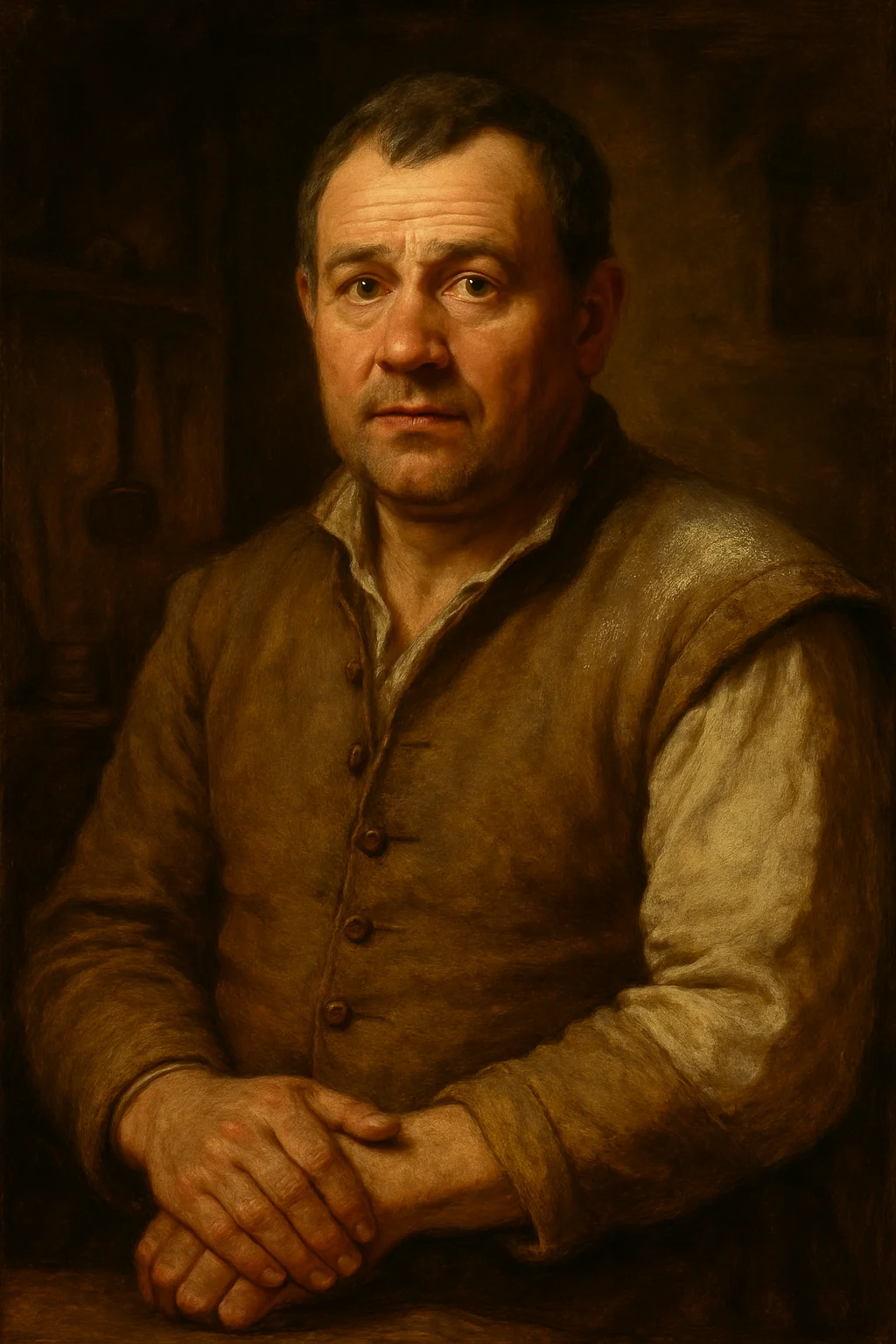
Tom Snout
Snout is the mechanicals' solution to the theatrical problem of how to represent Wall - a non-human, inanimate character that the play takes seriously as a dramatic challenge and resolves with maximum literalism. His performance is the mechanicals' most conceptually inventive contribution to the tradition of theatrical illusion.
Appears In
Who is Tom Snout?
Tom Snout is a tinker and one of the six Athenian craftsmen assembled by Quince to perform Pyramus and Thisbe at the Duke's wedding. He is assigned the role of Pyramus's father in the initial casting, but practical theatrical necessity - and the play's running concern about how to represent inanimate things on a stage - ultimately gives him the role of Wall itself, complete with chink.
His solution to the problem of Wall is entirely literal: he appears in Act V plastered in lime and roughcast, with a fist held up to represent the chink through which Pyramus and Thisbe whisper their love. It is one of the play's most cheerfully absurdist theatrical solutions, and Snout delivers it with the full sincerity of a man who has genuinely thought through what a wall would say if a wall could speak.
His Wall's prologue - announcing himself, his materials, and the purpose of the chink - is received with appreciative mockery from Theseus and Demetrius, who find his literal-minded solution both entirely inadequate and somehow, in its way, workable. When Pyramus and Thisbe have had their scene, Wall announces that his part is done and exits with a small, quiet dignity that the play does not quite allow to be entirely funny.
Motivation
Snout is motivated by the same good-faith commitment to the production that animates all of the mechanicals - he takes his role seriously, prepares his materials, and delivers his Wall with full conviction.
Personality
Snout's defining characteristic is a complete willingness to commit to whatever he is asked to do, no matter how peculiar. His Wall is the most conceptually unlikely of the mechanicals' roles - representing an inanimate object in human form - and he approaches it with a straightforwardness that is, in its way, the most theatrically honest thing in the play-within-the-play.