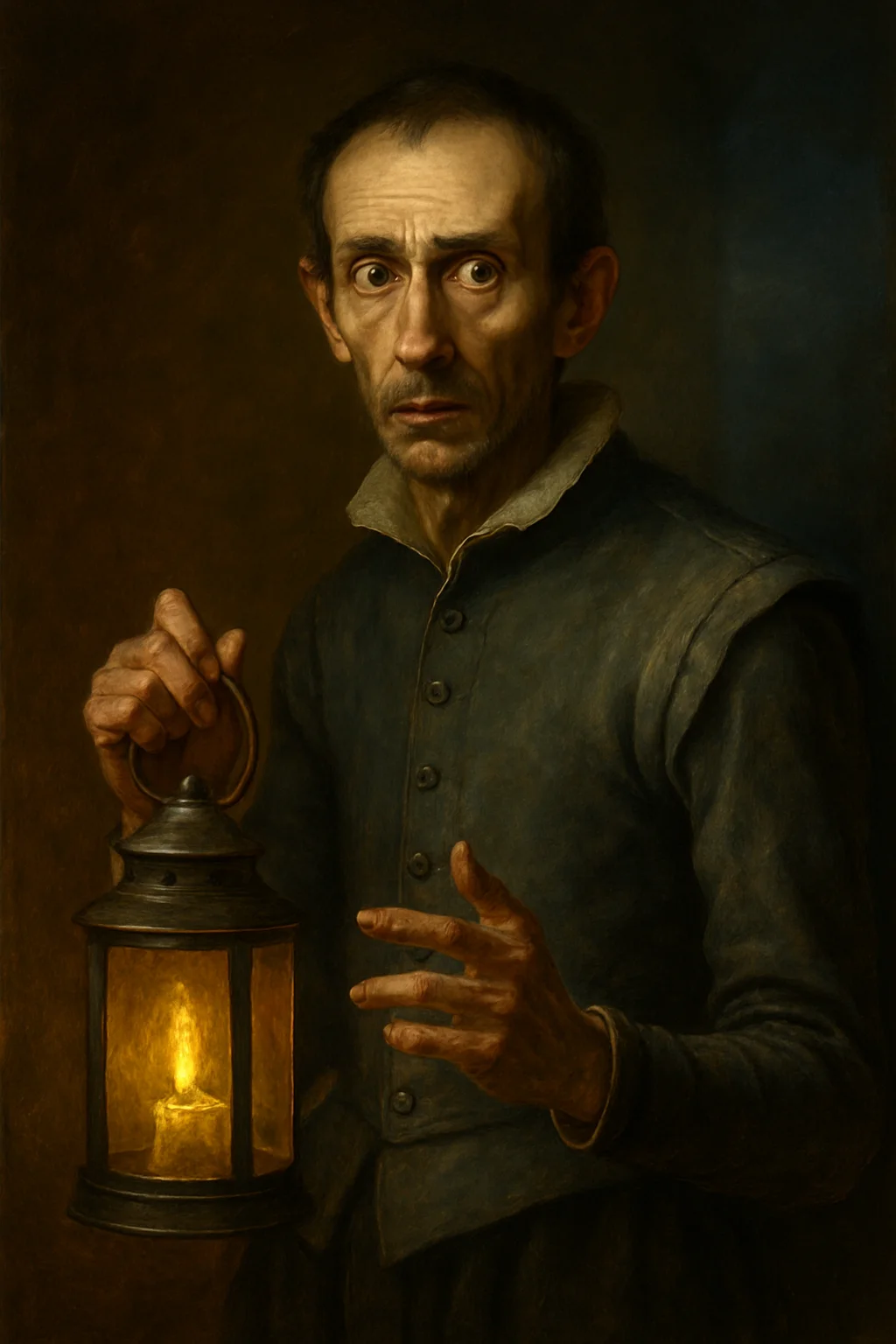
Robin Starveling
Starveling represents Moonshine in the mechanicals' play - a theatrical problem the company solves with maximum literalism, producing a performance that the courtly audience heckles into silence but that nonetheless serves its dramatic function. His trajectory from attempted explanation to silent perseverance is the play's most compact portrait of maintaining dignity under pressure.
Appears In
Who is Robin Starveling?
Robin Starveling is a tailor assigned the role of Thisbe's mother in the original casting, then recast as Moonshine - required to represent the moonlight under which Pyramus and Thisbe conduct their tryst. The practical problem of how to bring moonlight to the stage is one the mechanicals take seriously, debating whether to open a casement in the great chamber window or have someone carry a bush of thorns and a lantern.
Starveling's solution in Act V is the lantern and bush, with a dog: he enters carrying these props and attempts to deliver his Moonshine prologue to an audience of courtiers who interrupt him so relentlessly with commentary that he abandons the speech altogether and simply stands there, allowing his props to speak for themselves. His retreat from explanation to silent exhibition is the play's most eloquent small failure.
The commentary he receives - from Theseus, Demetrius, Hippolyta, and the lovers in succession - is among the play's most sustained examples of aristocratic wit deployed against artisan earnestness, and Starveling's eventual silent endurance of it has a dignity that the commentary does not entirely undermine. He stays. The moon shines. The play continues.
Motivation
Starveling is motivated by commitment to the production and a diminishing confidence in his ability to communicate with the audience he is performing for. His decision to stop speaking and simply be the Moon is the most pragmatic response to sustained interruption the play offers.
Personality
Starveling begins Act V with the intention of explaining himself and ends it having given up on explanation entirely. This arc - from prepared performer to silent object - is treated by the play with a dry sympathy: he is the most thoroughly frustrated of the mechanicals, and his frustrated silence is more expressive than continued speech would have been.