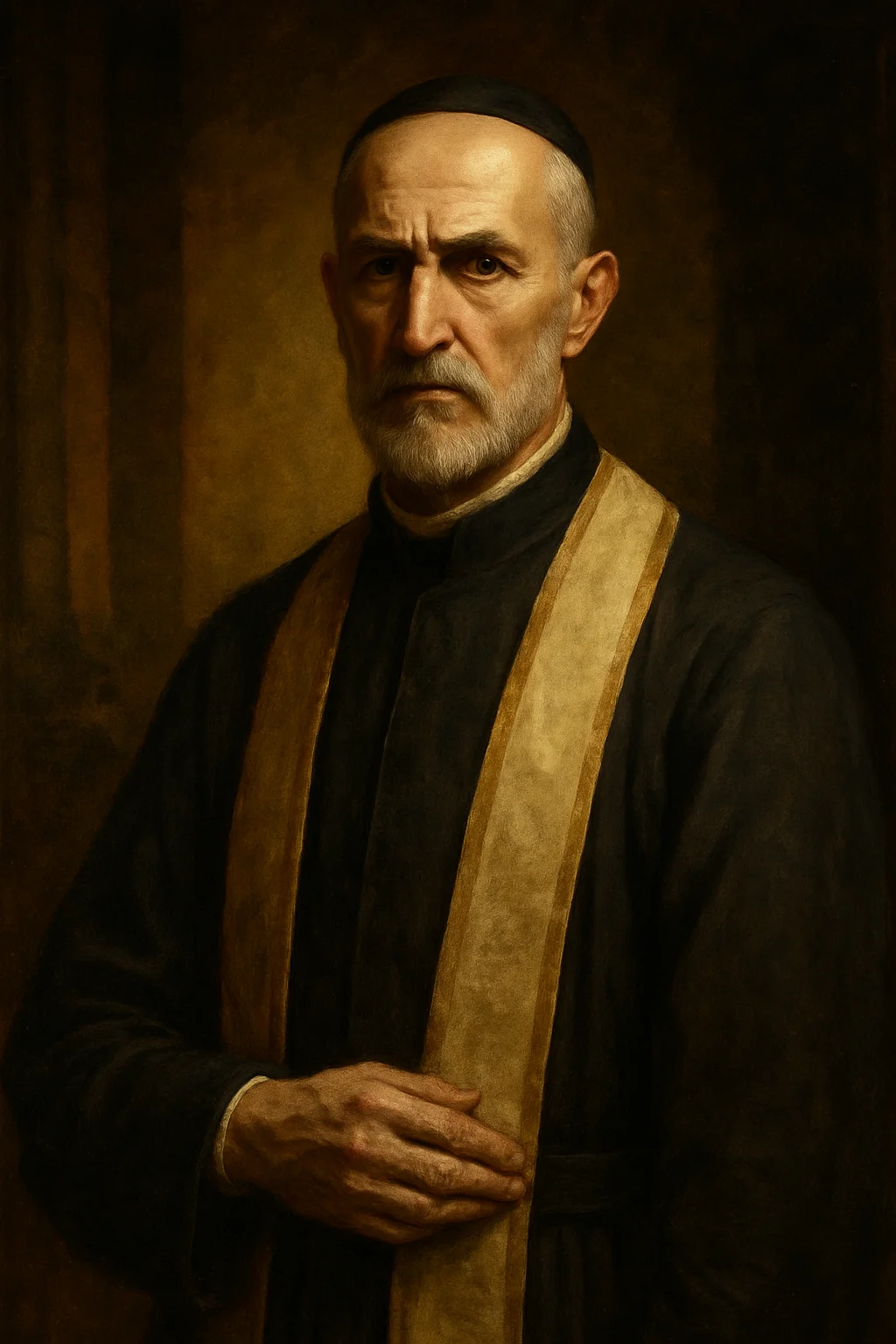
Priest
The Priest provides the legal and sacred confirmation of the Olivia–Sebastian marriage, making it binding before Sebastian is known and irrefutable when contested — he is the play's institutional anchor in a scene full of chaos.
Appears In
Biography
The Priest appears in two scenes but carries decisive weight in both. In Act IV, Scene 3, he solemnises the secret marriage of Olivia and Sebastian in Olivia's garden — a ceremony conducted in haste and privacy, Olivia not yet knowing she has the wrong twin, Sebastian not yet knowing why this extraordinary woman wants to marry him immediately. The Priest's willingness to perform the rite in these irregular circumstances is not questioned by the play; he is simply there, an instrument of the formal bond that will complicate and then resolve Act V.
His second appearance, in Act V, is his most consequential. Olivia, challenged by Orsino's jealous fury at what looks like Cesario's betrayal, calls on the Priest to confirm what was done. His testimony — 'A contract of eternal bond of love, / Confirmed by mutual joinder of your hands, / Attested by the holy close of lips, / Strengthened by interchangement of your rings' — is given in the formal, precise language of someone who has witnessed a sacrament and is reporting it exactly. His word cannot be doubted, and his words temporarily condemn Viola before Sebastian's arrival resolves everything.
The Priest speaks only when called upon, and only to confirm what he has seen. He is not a character in any psychological sense — he is an institution, the voice of formal witness in a play otherwise full of disguise, misidentification, and uncertainty. His precision is the counterpoint to every confusion that surrounds him.
Motivation
The Priest is motivated by his vocation — he witnesses and confirms what has been formally contracted, and reports it truthfully when called upon to do so. He has no agenda beyond the accurate account of what he saw.
Personality
The Priest is characterised entirely by function — his language is formal, his role is institutional, and his testimony is given without elaboration or interpretation. He is one of the few characters in the play who simply says what is true.