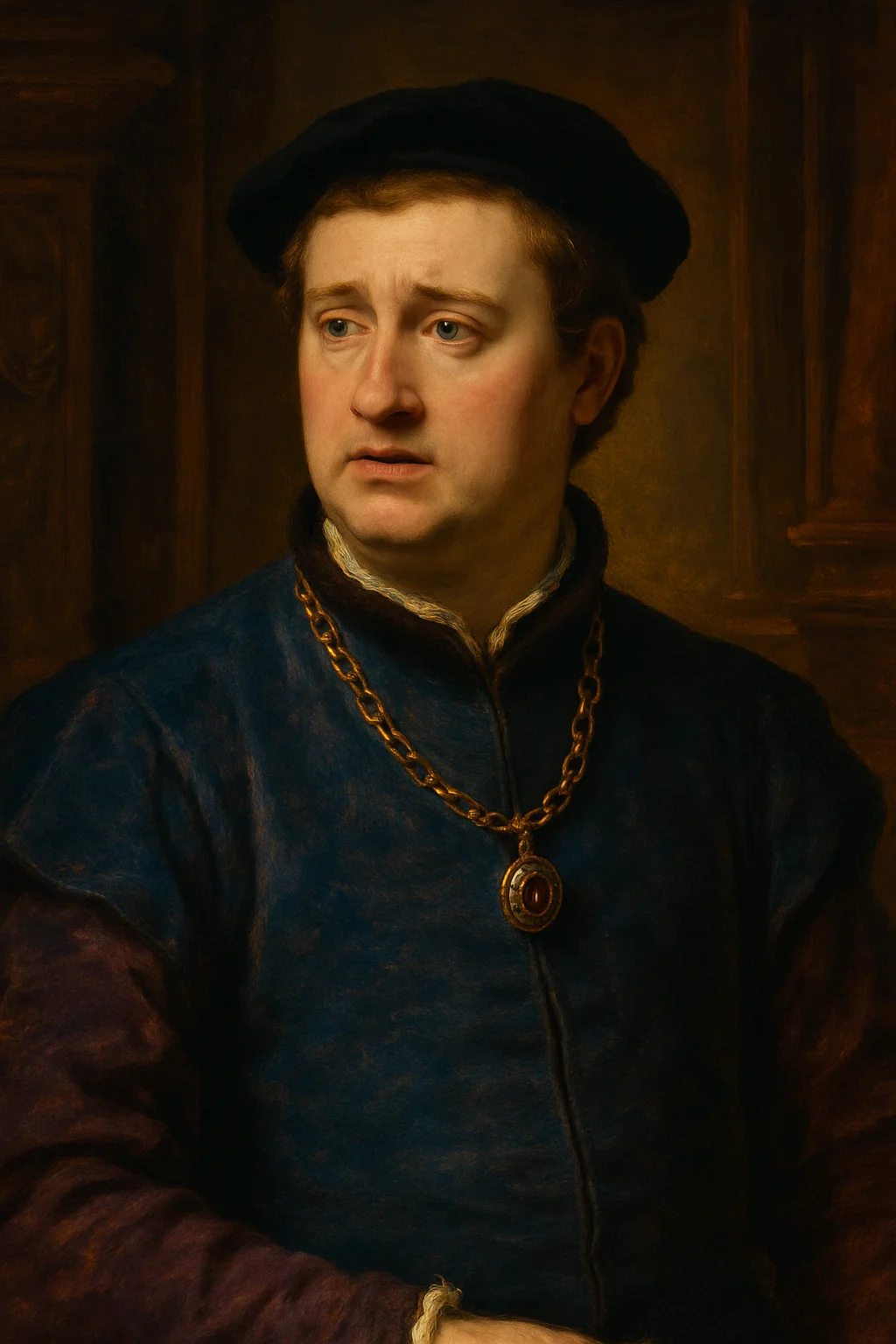
Roderigo
Roderigo functions as Iago's financier and expendable instrument, his gullibility a demonstration of how easily Iago's manipulation works on the openly credulous as well as the nobly trusting. His death, and the letters it exposes, contribute directly to Iago's final unmasking.
Appears In
Biography
Roderigo is a wealthy young Venetian gentleman infatuated with Desdemona, and his money and gullibility make him one of Iago's earliest and most useful tools. He appears in the play's opening scene already in Iago's debt and confidence, having paid him to help win Desdemona's favour — an arrangement Iago has no intention of honouring, since Desdemona is never genuinely obtainable to him.
Across the play, Roderigo is strung along with promises that his patience and money will eventually be rewarded, funding Iago's schemes and following his instructions without ever questioning why a supposed friend's advice so consistently fails to produce the promised result. His brief moments of doubt — threatening to demand his jewels back, or to expose Iago's dealings — are each defused by fresh, plausible lies.
His usefulness to Iago ends the same way his money did: spent. Sent to kill Cassio in the dark streets of Act V, Roderigo is wounded rather than killed by his target, and Iago, seizing the opportunity to silence a man who knows too much, stabs him fatally from behind. Letters found on his body after his death provide the final documentary proof of Iago's guilt, giving even his gullibility a last, unintended use in bringing the truth to light.
Motivation
Roderigo is motivated by an infatuation with Desdemona that borders on obsession, and by a willingness to spend both his fortune and his judgement on Iago's repeated assurances that persistence and money will eventually win her.
Personality
Roderigo is defined by a credulity that makes him almost a comic figure in the play's early scenes, funding schemes he does not understand and accepting excuses that should not survive scrutiny. His persistence in pursuing Desdemona despite every sign of futility reveals a man whose judgement is entirely subordinate to his desires, which is exactly what makes him so easy for Iago to use and, eventually, discard.