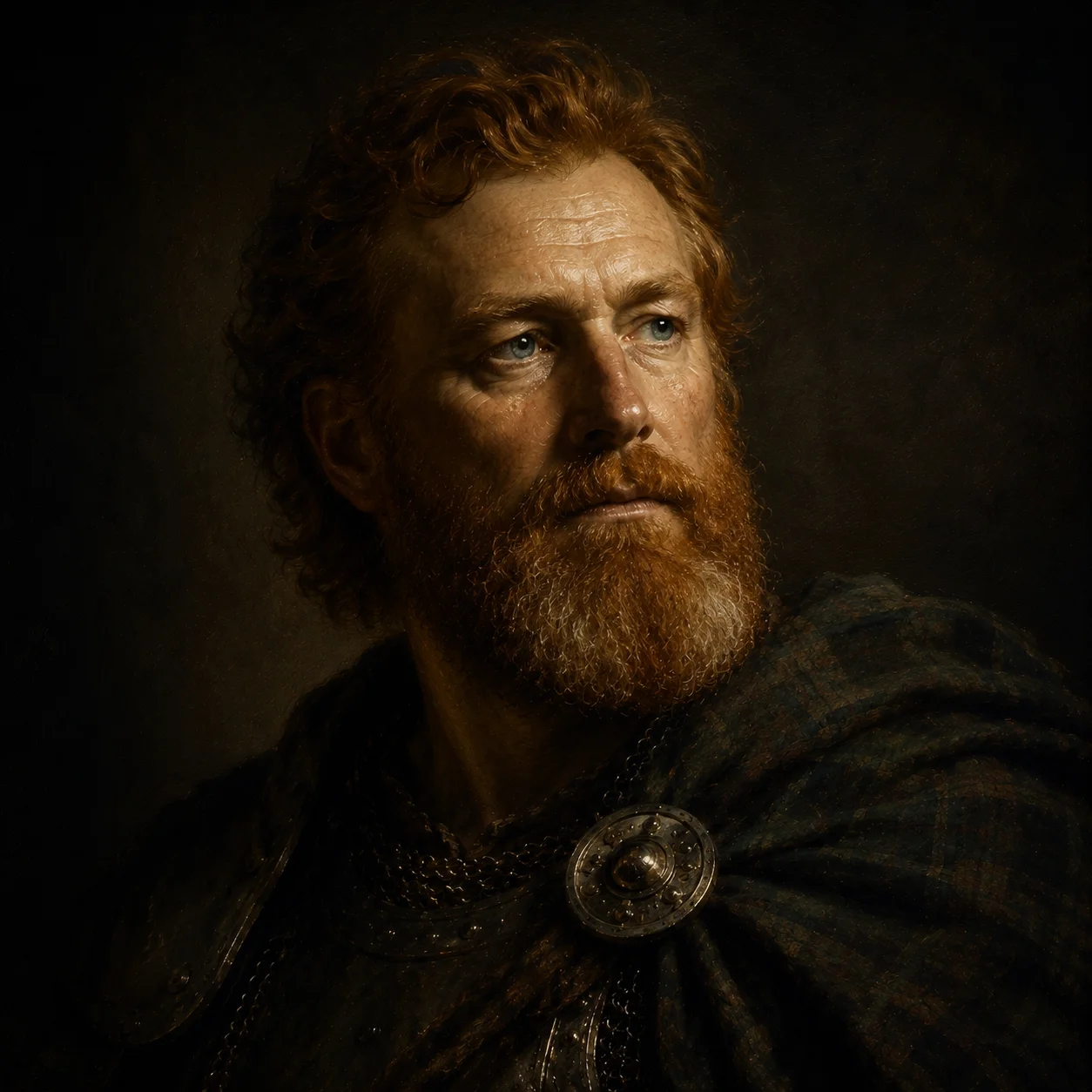
Banquo
Banquo functions as Macbeth's moral counterpart: faced with the same supernatural temptation, choosing differently. His ghost is the visible expression of Macbeth's guilt and the most dramatically effective of the play's supernatural elements.
Appears In
Who is Banquo?
Banquo is a Scottish general of equal standing to Macbeth, present at the encounter with the three witches and the recipient of his own prophecy: his descendants shall be kings, though he himself shall not. Unlike Macbeth, he processes this information with suspicion and moral clarity.
Banquo suspects Macbeth of foul play after Duncan's murder but does not act on his suspicion - in part from political self-interest, in part from a perhaps excessive caution. Shakespeare gives him this flaw to prevent him from being a simple moral foil.
His murder, ordered by Macbeth, transforms him into the most potent of all the play's ghosts - returning to occupy Macbeth's place at the banquet table and driving him to public incoherence.
Motivation
Banquo is motivated by loyalty to his king and caution about the witches' prophecy. He neither pursues the crown nor prevents its theft - he occupies the ambiguous middle ground that the play uses to make its moral landscape complex.
Personality
Banquo is noble but not naive. He knows the witches may be agents of deception and says so. His restraint in acting on his suspicions after Duncan's murder is a deliberate choice, and one the play invites us to judge without fully condemning.