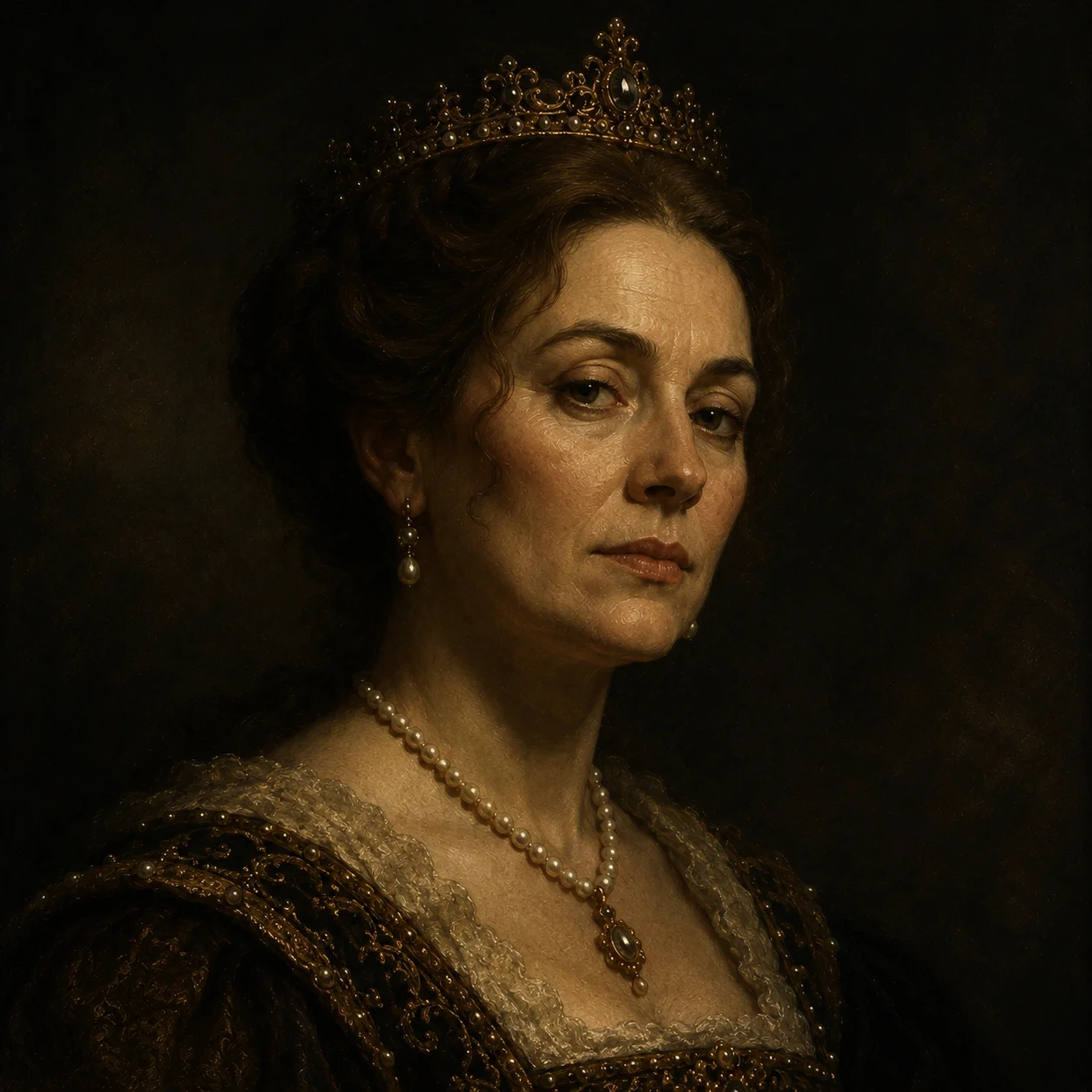
Gertrude
Gertrude occupies the emotional centre of Hamlet's anguish. Her remarriage is the wound that opens the play. She is simultaneously a cause of the tragedy and one of its victims, a woman shaped by the constraints of a world she did not design.
Appears In
Who is Gertrude?
Gertrude is the Queen of Denmark - mother to Prince Hamlet, widow of the late King Hamlet, and now wife to Claudius. She is a woman of genuine warmth and pragmatic composure: she has moved quickly from mourning into a new marriage that serves the political moment, and she carries herself in it with apparent ease.
Shakespeare keeps Gertrude deliberately ambiguous. How much she knew of Claudius's crime is never made clear. Her remarriage may be born of love, of political survival, or of something more entangled with Claudius that predates her first husband's death. The play refuses to resolve it.
In Act III Scene I, Gertrude is given only a few lines - a genuine wish that Ophelia's beauty might restore Hamlet's reason - but they reveal a woman capable of real tenderness, and clearly troubled by her son's distraction.
Motivation
Gertrude is motivated by a desire for stability and love. Whether she suspects Claudius of his crime or not, she has chosen him and the security of her position. Her tragedy is that this choice places her irrecoverably between her son and her husband.
Personality
Gertrude is not a schemer - she is a woman who has learned to survive within the constraints available to her. She is genuinely affectionate toward both Hamlet and Ophelia, and genuinely troubled by what she sees of Hamlet's condition. Her silence on the question of the murder reads less as active guilt and more as the studied unwillingness of a person who fears what a direct look might show her.